
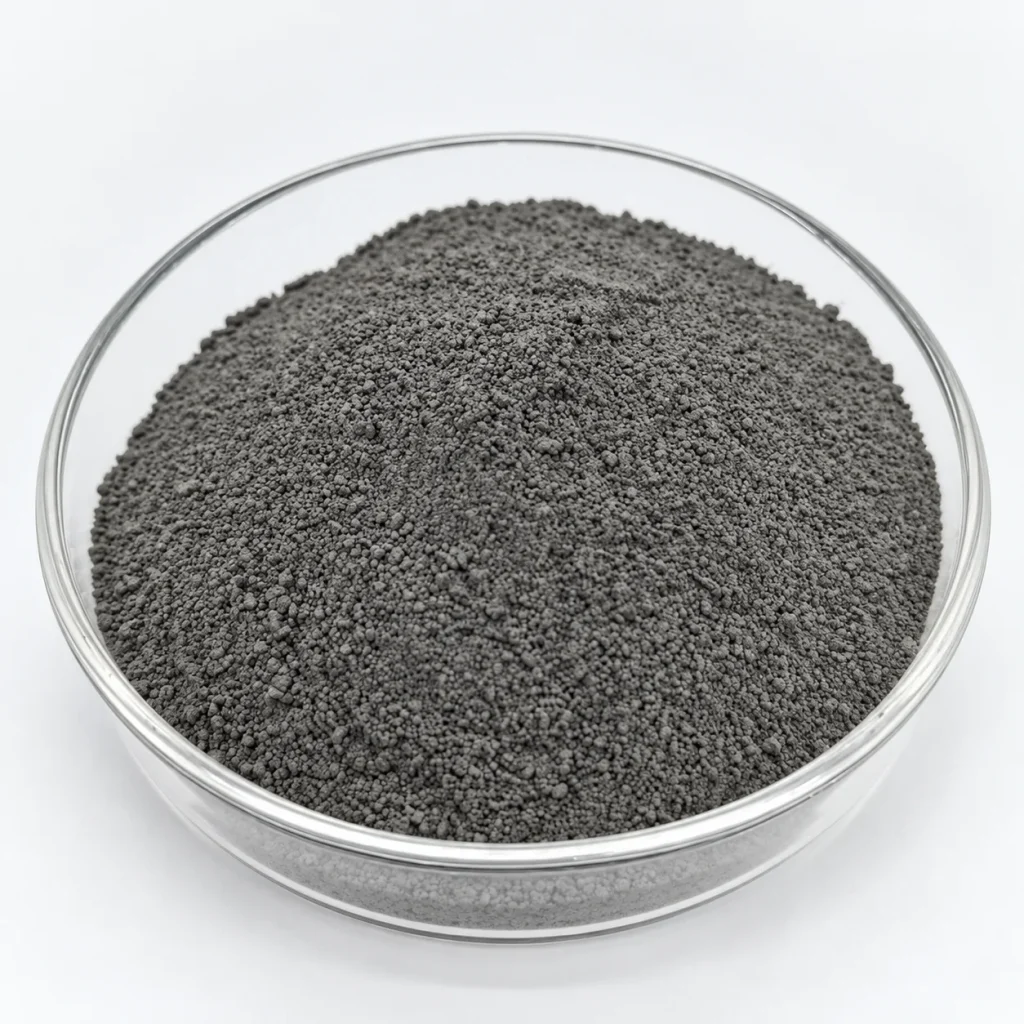
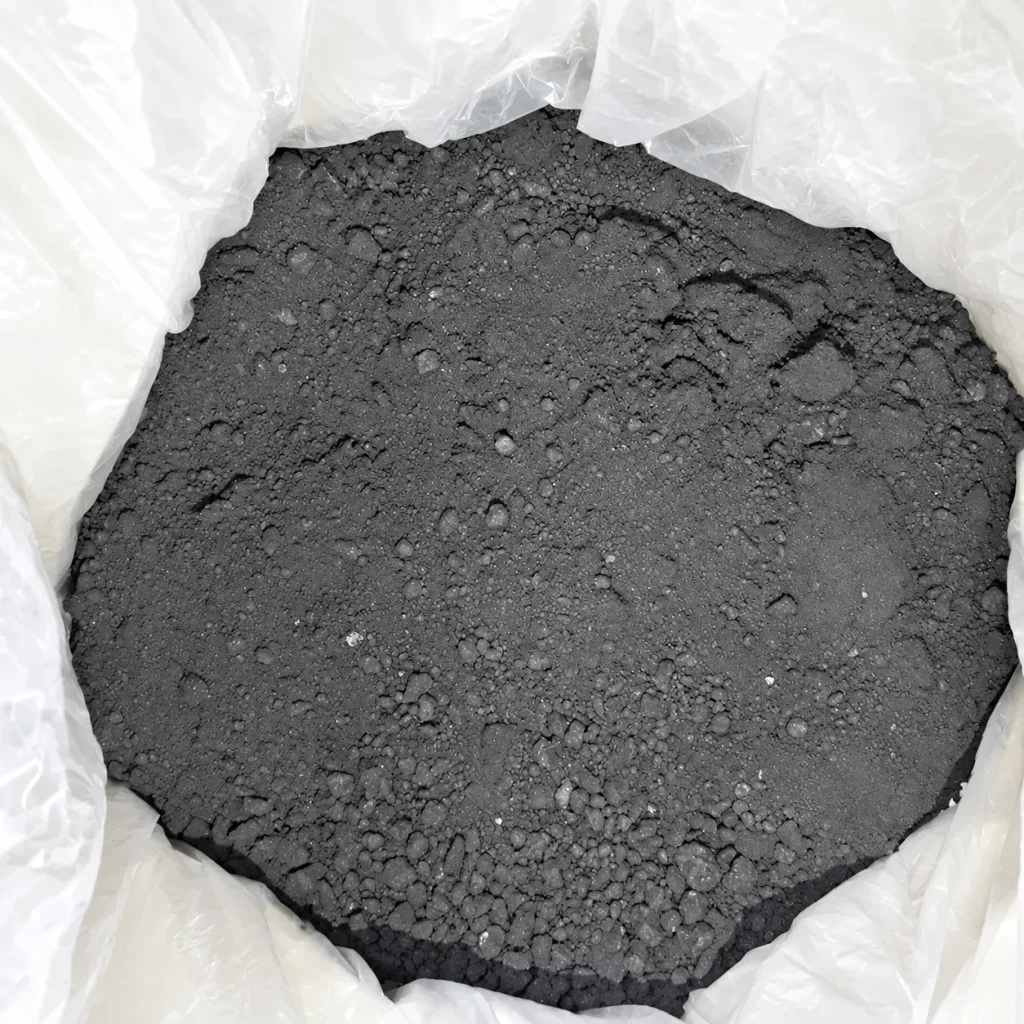
Molybdenum oxide in Grades A, B and C with reported Mo contents of 62.60%, 61.5% and 60.6%. Supplied in steel drums with a minimum order quantity of 20 metric tonnes.
Molybdenum oxide is a molybdenum-bearing raw material used in ferromolybdenum production, alloy steel, stainless steel and other metallurgical processes. Grade selection depends on molybdenum content, copper and carbon levels, other impurities and the requirements of the receiving process.
Raimand offers molybdenum oxide in Grades A, B and C with typical molybdenum contents of 62.60%, 61.5% and 60.6%, respectively, on a dry basis. These percentages represent elemental molybdenum content and should not be interpreted as molybdenum trioxide (MoO₃) purity. Copper, carbon and other impurity contents vary between grades; refer to the individual grade tables when comparing specifications.
All three grades have a typical particle-size distribution of 97% in the 0–4 mm fraction and 3% in the 4–7 mm fraction. The product is supplied in steel drums with a minimum order quantity of 20 metric tonnes.
When requesting a quotation, specify your preferred grade, required molybdenum content, impurity limits, particle-size requirements, quantity and destination. Final specifications, drum weights and delivery terms should be agreed for each order.
Key product highlights
- Three grade options with grade-specific impurity values
- Grade A: typical Mo content of 62.60% on a dry basis
- Grade B: typical Mo content of 61.5% on a dry basis
- Grade C: typical Mo content of 60.6% on a dry basis
Grades & variants
Grade C
| Parameter | Value | Unit | Basis / notes |
|---|---|---|---|
| Molybdenum (Mo) | 60.6 | % | Typical — Typical analysis on a dry basis. |
| Copper (Cu) | 1.2 | % | Typical — Typical analysis on a dry basis. |
| Sulphur (S) | 0.08 | % | Typical — Typical analysis on a dry basis. |
| Lead (Pb) | 0.02 | % | Typical — Typical analysis on a dry basis. |
| Carbon (C) | 0.4 | % | Typical — Typical analysis on a dry basis. |
| Phosphorus (P) | 0.03 | % | Typical — Typical analysis on a dry basis. |
| Size fraction 0-4 mm | 97 | % | Typical — Percentage in the stated particle-size fraction. |
| Size fraction 4-7 mm | 3 | % | Typical — Percentage in the stated particle-size fraction. |
- Molybdenum Oxide Grade C - Sample Technical SpecificationTDS
Sample technical specification for product reference only; not a laboratory or inspection certificate.
Grade B
| Parameter | Value | Unit | Basis / notes |
|---|---|---|---|
| Molybdenum (Mo) | 61.5 | % | Typical — Typical analysis on a dry basis. |
| Copper (Cu) | 0.82 | % | Typical — Typical analysis on a dry basis. |
| Sulphur (S) | 0.08 | % | Typical — Typical analysis on a dry basis. |
| Lead (Pb) | 0.03 | % | Typical — Typical analysis on a dry basis. |
| Carbon (C) | 0.4 | % | Typical — Typical analysis on a dry basis. |
| Phosphorus (P) | 0.02 | % | Typical — Typical analysis on a dry basis. |
| Size fraction 0-4 mm | 97 | % | Typical — Percentage in the stated particle-size fraction. |
| Size fraction 4-7 mm | 3 | % | Typical — Percentage in the stated particle-size fraction. |
- Molybdenum Oxide Grade B - Sample Technical SpecificationTDS
Sample technical specification for product reference only; not a laboratory or inspection certificate.
Grade A
| Parameter | Value | Unit | Basis / notes |
|---|---|---|---|
| Molybdenum (Mo) | 62.60 | % | Typical — Typical analysis on a dry basis. |
| Copper (Cu) | 0.43 | % | Typical — Typical analysis on a dry basis. |
| Sulphur (S) | 0.07 | % | Typical — Typical analysis on a dry basis. |
| Lead (Pb) | 0.04 | % | Typical — Typical analysis on a dry basis. |
| Carbon (C) | 0.05 | % | Typical — Typical analysis on a dry basis. |
| Phosphorus (P) | 0.03 | % | Typical — Typical analysis on a dry basis. |
| Size fraction 0-4 mm | 97 | % | Typical — Percentage in the stated particle-size fraction. |
| Size fraction 4-7 mm | 3 | % | Typical — Percentage in the stated particle-size fraction. |
- Molybdenum Oxide Grade A - Sample Technical SpecificationTDS
Sample technical specification for product reference only; not a laboratory or inspection certificate.
Applications & suitability
Molybdenum oxide is offered for molybdenum addition and further metallurgical processing, including ferromolybdenum, alloy steel, stainless steel and heat-resistant alloy production. End uses include suitable alloy components for oil and gas, petrochemical, automotive and heavy machinery service. Grade A may also be assessed for chemical and catalyst processing against the relevant process specification. Grade selection should consider copper, carbon and other impurity limits.
Ferromolybdenum production
Molybdenum-bearing raw material for ferromolybdenum manufacture, subject to the feed and impurity specification.
Alloy and stainless steels
For suitable steelmaking routes that require a molybdenum addition and specified impurity control.
Heat resistant alloys
For suitable alloys and components used in elevated-temperature industrial service.
Industrial alloy components
Alloy steel applications in oil and gas, petrochemical, automotive, mining and heavy machinery equipment.
Supply & logistics
- Minimum order quantity
- 20 MT
- Packaging
- Steel drums
Frequently asked questions
What grades of molybdenum oxide are listed?
Grades A, B and C are listed with Mo contents of 62.60%, 61.5% and 60.6%, respectively. Compare the grade tables and confirm the requirements of the intended process.
What is the minimum order quantity and packaging?
The minimum order quantity is 20 metric tonnes. The product is supplied in steel drums; drum weight and delivery arrangements should be confirmed with the sales team.
Do the Mo percentages indicate MoO3 purity?
No. The figures identify molybdenum content in the supplied grade data. They should not be entered or read as molybdenum trioxide purity.
Request a Quote for Molybdenum Oxide
Share your requirement and our export team will contact you with availability, specifications, MOQ and delivery terms.